
The near-term economic picture is fragile. Housing finance is becoming more expensive just as inflation tests the purchasing power of earnings. The next question is whether household income can continue to absorb both pressures. The second monthly report on wages is due next week alongside the Personal Income data, which should confirm the monetary figures from the August … [Read more...] about Mortgage Rates, the 30-Year Treasury and the Next Test of Household Income
market economics
U.S. Industrial Production: Tech Capacity Expands as Consumer Output Weakens

August 2026 industrial production reveals a sharp divide: consumer-facing output and automotive products are weak, while computer and electronic products continue to grow and the capacity to make them is expanding. That contrast matters beyond the next trading session. It points to where the U.S. industrial system is allocating productive resources, even as the wider economy … [Read more...] about U.S. Industrial Production: Tech Capacity Expands as Consumer Output Weakens
September CPI Preview: Energy Prices Rise as Mortgage Costs Squeeze Households

September 2026 CPI preview: Weekly fuel prices through September 21 point to renewed energy pressure ahead of the official inflation report, even as market sentiment appears optimistic. This is an early warning from pump prices, not a numerical forecast of September CPI. Gasoline prices enter the Consumer Price Index (CPI) directly; diesel can affect the cost of moving goods. … [Read more...] about September CPI Preview: Energy Prices Rise as Mortgage Costs Squeeze Households
August 2026 U.S. Retail Sales: Real Growth Persists, but Fuel Costs Distort the Headline

August 2026 U.S. retail sales remained positive in real terms, but the headline conceals two important pressures: relative weakness in motor vehicles and the growing share of household spending absorbed by gasoline. The broad figures are encouraging at first glance. Total retail and food-services sales increased by 1.856% year over year in August, while the January–August … [Read more...] about August 2026 U.S. Retail Sales: Real Growth Persists, but Fuel Costs Distort the Headline
August 2026 Jobs Report: Payrolls Rebound, but CPI Holds the Real-Wage Verdict

The August 2026 employment report delivered the labor-market recovery that July failed to provide. Payrolls increased by 162,000, unemployment remained at 4.1%, average weekly earnings rose by approximately 0.56%, and aggregate private payrolls increased by 0.7%. That is positive for household income and near-term consumption. It is not, however, an uncomplicated market … [Read more...] about August 2026 Jobs Report: Payrolls Rebound, but CPI Holds the Real-Wage Verdict
Jackson Hole 2026: Warsh’s Higher-Rate Warning Leaves the Debt Question Unanswered

Jackson Hole 2026 produced a monetary-policy doctrine, but it did not produce a solution. Federal Reserve Chair Kevin Warsh delivered his clearest warning yet that rates may have to rise if inflation does not move back toward the Fed’s 2% target “clearly and at sufficient speed.” Yet he stopped short of recommending an immediate increase, offered no forward … [Read more...] about Jackson Hole 2026: Warsh’s Higher-Rate Warning Leaves the Debt Question Unanswered
U.S. Personal Income and Spending, July 2026: Shadows and Bright Spots Coexist

U.S. personal income and spending data for July 2026 confirm an economy in which shadows and bright spots are not taking turns—they are coexisting. Real wage growth has weakened, income from assets has lost purchasing power and households have drawn heavily on savings. At the same time, transfer receipts and lower personal taxes are supporting disposable income, while … [Read more...] about U.S. Personal Income and Spending, July 2026: Shadows and Bright Spots Coexist
What Is Stagflation? Why It Hurts the Economy and Financial Markets

Stagflation is the uncomfortable combination of persistent inflation, weak or stagnant economic growth and a deteriorating labor market. Prices remain under pressure even though the economy is losing momentum. That makes stagflation especially difficult for households, companies, investors and central banks. Stagflation in One Minute The word combines stagnation and … [Read more...] about What Is Stagflation? Why It Hurts the Economy and Financial Markets
Why Markets Move Before the News: The Institutional Edge over the public market

Why Does the Market Know Before the News? Inside Institutional Models, Private Data and Trading Speed At 8:30:00 a.m. Eastern Time, an important economic report becomes public. Almost immediately, Treasury yields, currencies, equity futures and gold begin moving. By the time the headline appears on an ordinary retail calendar, the first wave of repricing may already be … [Read more...] about Why Markets Move Before the News: The Institutional Edge over the public market
How to Read the Macro Economy: The Market Dashboard Every Trader Should Understand

A macro dashboard connects growth, inflation, employment, monetary policy, bond yields, currencies and commodities to reveal the economic regime influencing financial markets. Markets do not trade one economic number in isolation. They trade the relationship between growth, inflation, employment, monetary policy, liquidity and financial conditions. … [Read more...] about How to Read the Macro Economy: The Market Dashboard Every Trader Should Understand
July 2026 Inflation Monitor: Fuel Prices Ease but Mortgage Rates Remain Elevated

Data through July 20, 2026: The first three weeks of July indicate that immediate inflationary pressure remains broadly contained, although the renewed rise in retail fuel prices and persistently high mortgage rates require close monitoring. Early July Inflation Overview The first three weeks of July 2026 do not yet point to a significant new acceleration in inflation from … [Read more...] about July 2026 Inflation Monitor: Fuel Prices Ease but Mortgage Rates Remain Elevated
Frankfurter bonds! How is trade between large companies financed?
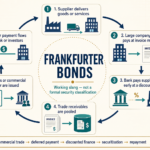
Frankfurter Bonds Explained: The Modern Repackaging of Corporate Trade Credit “Frankfurter bonds” is working financial slang rather than an official security classification. It describes a modern chain of corporate financing in which deferred invoices are discounted by banks or other intermediaries, pooled and potentially repackaged for investors. What Are “Frankfurter … [Read more...] about Frankfurter bonds! How is trade between large companies financed?
June 2026 Retail Sales After CPI: Real Consumer Spending Improves

Unadjusted US retail-sales data for June 2026, adjusted using CPI All Items, provides an encouraging indication of recovery in real consumer spending. However, the wider six-month trend remains more moderate than the June result alone suggests. Official June 2026 Retail Sales The US Census Bureau estimated seasonally adjusted retail and food-services sales of $768.6 billion … [Read more...] about June 2026 Retail Sales After CPI: Real Consumer Spending Improves
June CPI Outlook Improves as Energy Prices and Crude Oil Fall
June CPI Outlook Improves as Energy Prices Fall and Mortgage Rates Stabilize Data updated through June 22, 2026 The inflation picture improved during the first three weeks of June. Energy prices declined sharply from May levels, while mortgage rates remained broadly stable. Together, these developments reduce the probability of renewed inflationary pressure entering … [Read more...] about June CPI Outlook Improves as Energy Prices and Crude Oil Fall
May 2026 Industrial Production Data Support Continued Technology-Sector Growth
Federal Reserve industrial production data for May 2026 show that business equipment, computer hardware, electronic products and semiconductor capacity are expanding substantially faster than the broader industrial economy. The figures strengthen the argument that the technology-sector rally is being supported by real … [Read more...] about May 2026 Industrial Production Data Support Continued Technology-Sector Growth
March 2026 Eco-Employment Report: Real Weekly Earnings Are Losing Ground as Inflation Surges
The March 2026 eco-employment report sends a clear message: inflation is now eroding real weekly earnings across large parts of the US economy, and that shift is likely to shape consumer behavior, market sentiment, and short-term trading conditions in the weeks ahead. Real Weekly Earnings Matter More Than Annual Averages In practical terms, employed households … [Read more...] about March 2026 Eco-Employment Report: Real Weekly Earnings Are Losing Ground as Inflation Surges
Eurobonds, EUR/USD, Oil, and U.S. Equities: A Market POV on the Current Flow Regime – gulf oil straits
A macro market perspective on sovereign bond pressure, dollar strength, energy risk, and relative U.S. asset support Market context as of: Date: March 23, 2026 Executive Summary The current market structure points to a clear cross-asset pattern: pressure on European sovereign bonds, a weaker euro versus the U.S. dollar, a strong bid in crude oil, and … [Read more...] about Eurobonds, EUR/USD, Oil, and U.S. Equities: A Market POV on the Current Flow Regime – gulf oil straits
The U.S. Consumer Is Stronger Than the Headlines Suggest
Despite persistent media narratives emphasizing uncertainty and fragility, real consumption data present a far more constructive picture. According to official data from the Bureau of Economic Analysis (BEA) , specifically Personal Income Table 2.4.6U (Real Personal Consumption Expenditures, Chained Dollars), full-year (YTD to … [Read more...] about The U.S. Consumer Is Stronger Than the Headlines Suggest
Mid-Price Consumption, AI Pricing, and the Self-Regulating Market
1) The Consumer Has Shifted — From Premium to Prudence The U.S. consumer has not disappeared. Volumes are not collapsing. What has changed is the price discipline of the household sector. Spending is increasingly concentrated in medium- to medium-low-priced goods and services. This reflects caution, selective … [Read more...] about Mid-Price Consumption, AI Pricing, and the Self-Regulating Market
U.S. Macro Snapshot: Retail Sales, Import Prices, Real Wages, and Unemployment rate range
1) Retail Sales: Consumption Is Still There, but the Mix Has Changed The key message from recent retail sales trends is not that consumption is collapsing in physical terms, but that households are increasingly concentrating spending on medium- to medium-low-priced goods and services. In other words: volumes can hold up, while consumers … [Read more...] about U.S. Macro Snapshot: Retail Sales, Import Prices, Real Wages, and Unemployment rate range